Understanding the True Cost of Senior Care in Dallas-Fort Worth


The moment you start researching senior care options in the Dallas-Fort Worth metroplex, the sticker shock usually hits hard.
Whether you are looking at large assisted living facilities in Frisco or private residential care homes in Fort Worth, the numbers can feel overwhelming. However, there is a massive difference between the "quoted price" on a brochure and the true cost you actually pay each month.
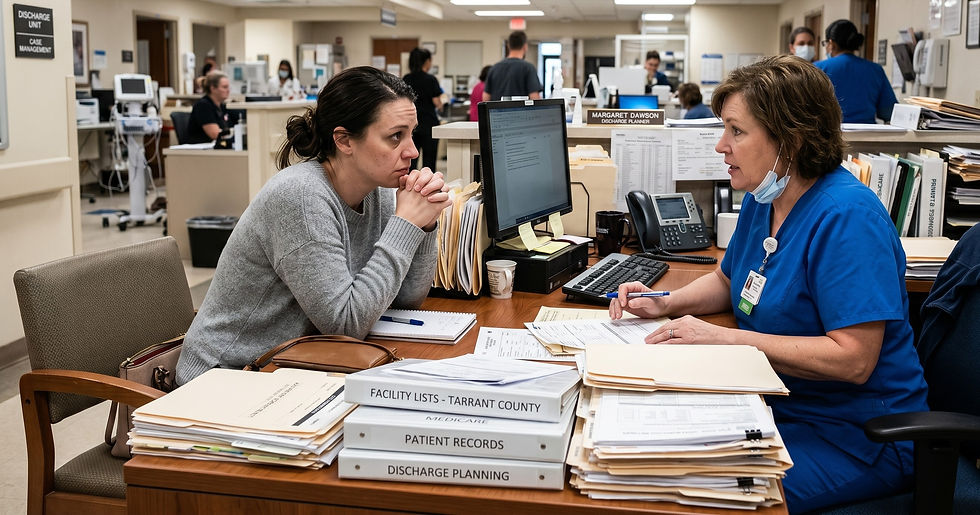
As a nurse with 15 years of clinical experience, I have sat across the table from countless families who are financially exhausted simply because they did not understand how senior care pricing actually works. Before you make a decision, here is the transparent, insider’s breakdown of what senior care really costs in DFW—and how to avoid the hidden financial traps.
1. The Large Facility "Levels of Care" Trap
When you tour a large, 100-bed corporate assisted living facility, they will usually quote you a "base rate" of around $3,500 to $5,000 a month. That sounds manageable until you read the fine print.
In most large facilities, that base rent only covers the physical room and the food. Every single aspect of actual care is calculated on a sliding "Level of Care" point system. If your parent needs help showering, that is an extra fee. Medication management? Extra fee. Escorts to the dining room? Extra fee. As your parent ages and their needs inevitably increase, those points add up quickly. It is incredibly common for families to start at a $4,000 base rate and end up paying $7,000 to $9,000 a month just a year later.
2. The Real Math of "24/7 Private In-Home Care"
Many families initially decide to keep their parent at home and hire a private caregiver, assuming it will be the most cost-effective route. If your parent only needs a few hours of companionship a week, it is! But if they require 24/7 supervision to prevent falls or manage dementia, the math becomes staggering.
Let's look at the reality of 24/7 private care in DFW:
· The average private caregiver costs roughly $25 per hour.
· $25/hr x 24 hours x 30 days = $18,000 per month.
And remember, that $18,000 does not cover your parent's mortgage, property taxes, utilities, groceries, or medical supplies.
3. The Invisible Cost of Family Caregiving
Often, the biggest cost of senior care doesn't come out of a bank account; it comes out of the family's physical and emotional health.
When adult children try to fill the caregiving gaps to save money, they end up paying a heavy hidden cost. They take unpaid time off work, pause their own career advancement, and sacrifice their personal relationships. The physical toll of lifting a parent, managing their medications, and functioning on interrupted sleep leads directly to severe caregiver burnout. Protecting your own well-being and financial future is a valid, necessary part of this equation.
4. The Flat-Rate Residential Care Model
If the unpredictable fees of a large facility are stressful, and the $18,000 price tag of 24/7 in-home care is out of reach, there is a "softer setting" that bridges the gap.
High-quality Residential Care Homes (boutique, house-style care environments) usually operate on a much simpler, radically transparent financial model. Instead of confusing point systems, these homes typically charge a flat, all-inclusive monthly rate.
While a luxury boutique home with a highly exclusive 1:2 or 1:3 care ratio might charge $7,000 to $8,000 a month, that number is generally locked in. It covers their room, fresh home-cooked meals, personal laundry, and all 24/7 care assistance. There are no surprise invoices at the end of the month, allowing families to actually budget for their parent's future.
5. Funding the Gap: You Might Have Help
The biggest misconception in senior care is that Medicare will pay for it. Medicare does not cover room and board for long-term assisted living or residential care. However, there are two major resources families often overlook:
1. VA Aid & Attendance: If your parent is a veteran (or the surviving spouse of a veteran) who served during a period of war, they may qualify for a significant monthly stipend to help pay for private care.
2. Long-Term Care Insurance: If your parent had the foresight to purchase a policy years ago, these funds can almost always be applied directly to a licensed residential care home.
You Do Not Have to Navigate This Alone
Figuring out how to pay for senior care while ensuring your parent gets the safest, highest quality of life is one of the heaviest burdens a family can carry. If you are feeling overwhelmed by the financial landscape of senior care in the Dallas-Fort Worth area, please reach out. My goal is to ensure you have the clinical truth and the local resources you need to make a safe, sustainable decision.
Whether you need help understanding what level of care your parent truly needs, or you just want to explore what a flat-rate "softer setting" looks like, give me a call. Let's have a completely free, zero-pressure conversation to get your family pointed in the exact right direction.
[Click the link below to Contact Tamika for Support and Guidance]
Tamika Mason
Nurse, Owner & CEO
Your Forever Home, LLC


Comments