The 48-Hour Panic: Transitioning from Rehab to Residential Care

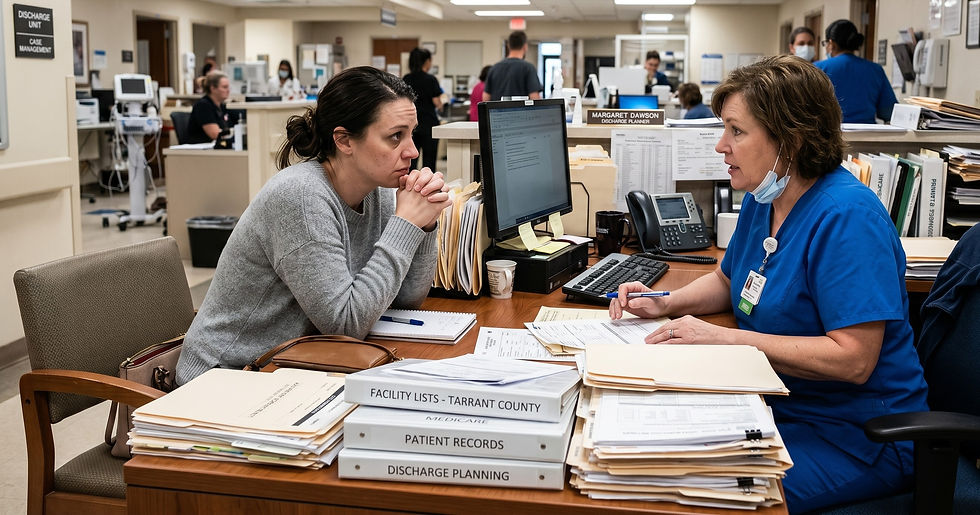
It almost always happens the exact same way. Your parent has been in a short-term rehab facility for a few weeks after a fall, a stroke, or a surgery. They are finally making progress. Then, the phone rings. It’s the facility’s discharge planner: "Medicare is cutting off coverage. Discharge is in 48 hours. Where are they going next?"
Panic immediately sets in. You know they aren’t strong enough to go back to their own house alone, but the thought of moving them into a massive, permanent nursing facility feels like a step backward.
In my 15 years of clinical nursing, I have guided countless families through this exact crossroad. The transition from rehab to long-term care is one of the most vulnerable windows for a senior. Here is what you need to know to protect their recovery, prevent hospital readmission, and find a landing spot that actually feels like home.
The Illusion of "Going Back Home"
The natural instinct is to bring Mom or Dad back to their own house, perhaps with a visiting home health nurse a few times a week. Unfortunately, this is where the highest rate of setbacks occurs.
Rehab facilities are highly controlled environments. There are no loose rugs, no stairs to navigate, and someone is always there to manage the complex new list of medications. At home, those safety nets disappear. A single missed dose of a new blood thinner, or one trip over a threshold while trying to reach the bathroom at 2 AM, can instantly erase weeks of hard-earned physical therapy and result in a devastating readmission to the hospital. Not to mention the mental & emotional fear that can be added to your loved one's mind.
The "Big Box" Readmission Trap
If home isn't safe, families often default to large assisted living facilities. However, large facilities operate on tight staffing ratios—often 1 caregiver to 15 or 20 residents.
When your parent discharges from rehab, they usually have specific "homework" to maintain their mobility: daily walking exercises, stretching routines, or specific dietary restrictions. In a crowded facility, overwhelmed staff simply do not have the time to walk alongside your parent for 20 minutes every afternoon to practice their gait. Without that dedicated, one-on-one encouragement, seniors often regress, losing the strength they worked so hard to build in rehab.
The "Softer Setting" Solution
This is where the boutique residential care model changes the trajectory of your parent's recovery.
Transitioning from the sterile, clinical environment of a rehab center into a warm, quiet, actual home is a massive emotional relief for a senior. But more importantly, the clinical oversight remains intact.
Because most residential care homes operate on a 1:3 to 1:5 caregiver-to-resident ratio. This means caregivers we have the time to actually focus on your parent's continued progress. If physical therapy recommends daily mobility exercises, residential care homes have the bandwidth to ensure they happen. If they need close monitoring for post-surgical infection, those subtle warning signs are caught much faster than the big box institutions.
Residential care homes can bridge the gap.
Are you facing an impending rehab discharge and feeling pressured to make a fast decision? Don't let the 48-hour window force you into the wrong environment.
As a nurse dedicated to advocating for Tarrant County seniors, I am here to help you weigh your options safely. Click the link below to call and schedule a free, 15-Minute Vision Alignment call to discuss your parent's discharge plan and see if a low-ratio residential setting is the safe path forward.
Tamika Mason
Nurse, Owner & CEO
Your Forever Home, LLC

Comments